
Unlocking value through flexible procurement in projects with unavoidable uncertainty

In construction procurement, fixed-price lump sum contracts are often treated as the default option. They promise cost certainty, risk transfer, and clear accountability. However, experienced project investors know that this certainty is often illusory, particularly in projects where scope, quantities, or technical requirements are not fully defined at contract award.
In such cases, forcing certainty too early does not eliminate risk. It simply shifts it into inflated prices, defensive tendering, or downstream disputes. Re-measurement and cost reimbursement contracts offer alternative commercial structures that acknowledge uncertainty andhat manage it explicitly rather than concealing it.
This article explores when and why these contract types become a strategic advantage by aligning procurement strategy with project reality.
Procurement Strategy and Risk Allocation
At its core, procurement is not simply about selecting a contractor. It is about allocating risk across time, cost, and quality. The most effective procurement strategies follow a simple principle:
Risk should sit with the party best able to manage it.
When clients attempt to transfer risks they cannot fully define, such as unknown ground conditions or evolving design, contractors respond predictably by pricing contingencies or declining to bid. Conversely, when clients retain risks that could be efficiently transferred, they lose the benefits of competitive pricing and contractor innovation.
Choosing between lump sum, re-measurement, and cost reimbursement contracts is therefore a strategic decision that directly shapes project outcomes. While other procurement and contract models exist, this article focuses on these types, as they form the analytical basis for the discussion in this article.
The Procurement Triangle: Cost, Time, and Quality
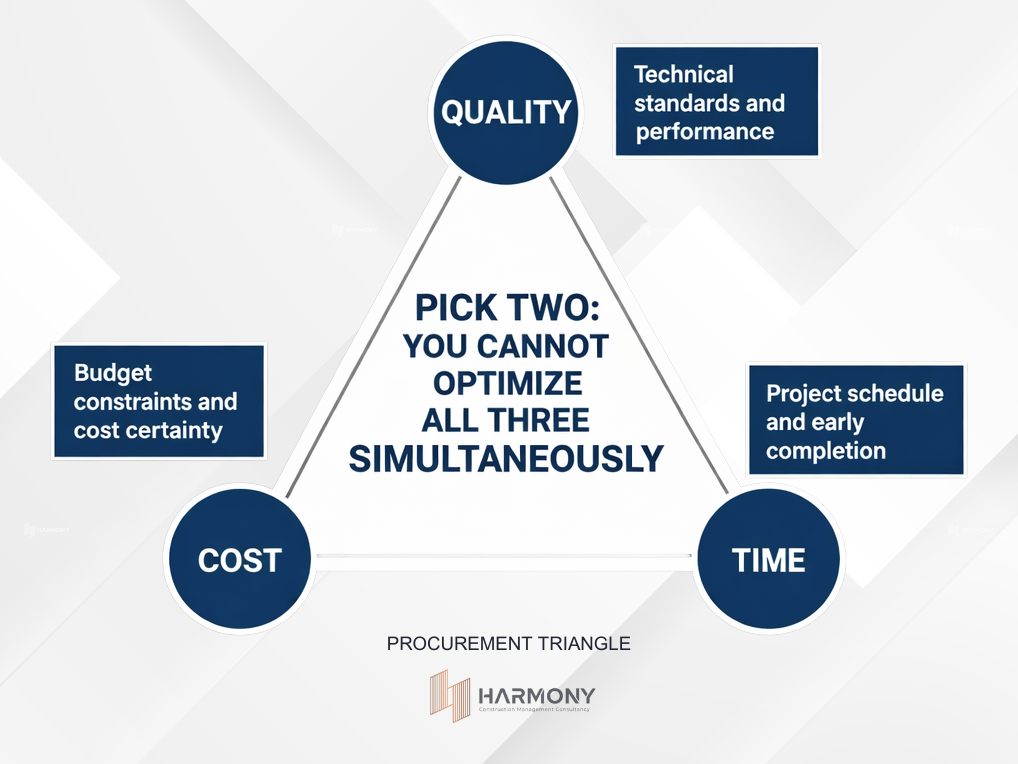
[IMAGE 1 – Procurement Triangle: Cost / Time / Quality]
Every project balances three competing priorities: cost certainty, speed, and quality. Optimising one inevitably constrains the others.
- Lump sum contracts prioritise cost certainty, often at the expense of flexibility and early start.
- Cost reimbursement contracts prioritise speed and adaptability while accepting cost uncertainty.
- Re-measurement contracts sit between these extremes, offering flexibility while maintaining rate-based cost discipline.
Understanding where a project sits within this triangle is the first step toward selecting the appropriate contract form.
What Are Re-measurement and Cost Reimbursement Contracts?
Re-measurement Contracts
Under a re-measurement contract, payment is based on actual quantities executed and valued at pre-agreed unit rates. While the nature of the work is defined at tender stage, final quantities are confirmed during construction.
The contractor carries unit price risk, while the client carries quantity risk. This structure works well when design is sufficiently developed to describe the works but quantities cannot be reliably predicted. It allows construction to begin before full design completion without forcing contractors to price unknown quantities into a fixed sum.
Cost Reimbursement Contracts
Cost reimbursement contracts operate on a different logic. The contractor is paid for actual allowable costs incurred, plus an agreed fee. The client explicitly retains cost risk in exchange for flexibility, speed, and transparency.
These contracts are typically used where scope cannot be defined in advance, work must start immediately, or technical uncertainty is high. Their effectiveness depends on disciplined cost control, audit rights, and active client involvement.
How They Compare
| Criterion | Re-measurement | Cost Reimbursement | Lump Sum |
| Payment basis | Measured quantities × unit rates | Actual costs + agreed fee | Fixed contract sum |
| When final cost is known | At practical completion | At practical completion | At contract award |
| Who bears quantity risk | Client | Client (by definition) | Contractor |
| Who bears cost risk | Contractor | Client | Contractor |
| Contractor incentive to control cost | High | Medium to low | Very high |
| Design completion required | Partial (nature of works known) | Minimal (works can evolve) | Full (complete bill of quantities) |
| Procurement speed | Medium | Fast (immediate start) | Slow |
| Competitive bidding | Yes, on unit rates | Limited; more negotiated | Yes, straightforward comparison |
| Budget overrun risk | Moderate (quantity variance) | High (no fixed ceiling) | Low (if scope unchanged) |
When Re-measurement Contracts Create Real Value
1. Early Start with Incomplete Design
Re-measurement contracts allow design and construction to overlap without artificial risk transfer. Contractors commit to unit rates rather than speculative quantities, enabling early mobilisation without inflated pricing.
2. Genuine Quantity Uncertainty
Where ground conditions or quantities cannot be reliably predicted, re-measurement avoids worst-case lump sum pricing and excessive contingencies.
3. Term Maintenance and Call-off Works
Schedule-of-rates structures provide flexibility where work type is known but volume is not.
4. Design Evolution and Value Engineering
Because payment tracks quantities rather than fixed sums, beneficial design changes naturally reduce cost without adversarial variation processes.
When Cost Reimbursement Contracts Become the Better Option
1. Undefined or Emergency Scope
Cost reimbursement enables immediate mobilisation where scope cannot be defined in advance.
2. High Technical Complexity or Innovation
Contractor incentives shift from claims management to problem-solving.
3. Volatile Inflation and Long Durations
Index-linked cost reimbursement protects both client and contractor from uncontrollable escalation.
4. Performance and Quality-Critical Projects
Where failure carries disproportionate consequences, cost reimbursement supports quality, testing, and innovation.
Choosing the Right Contract: A Practical Framework
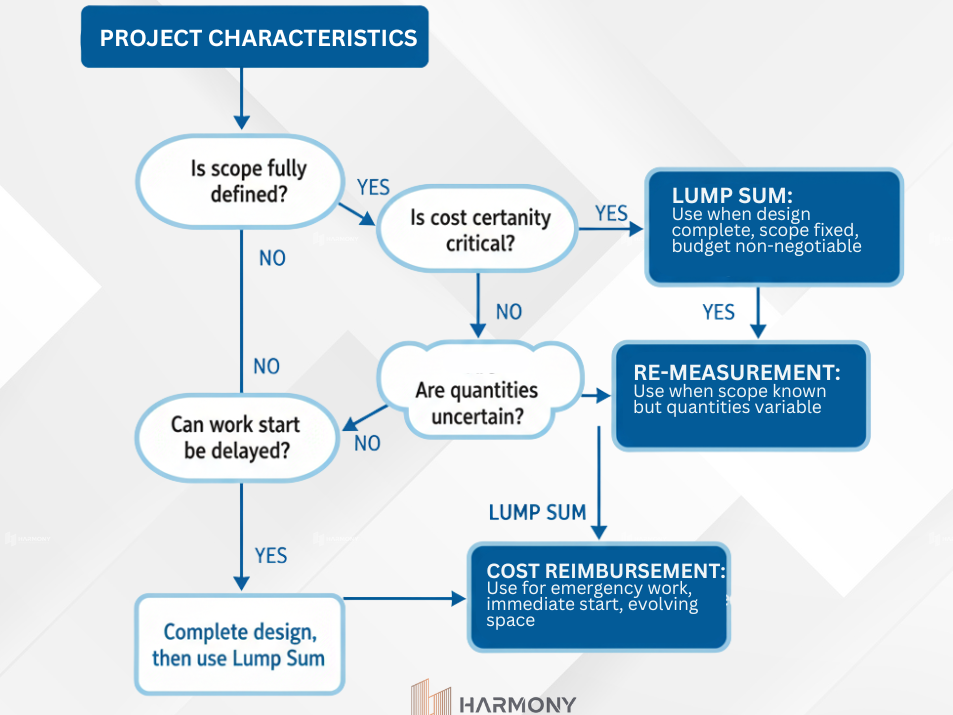
[IMAGE 2 – Contract Selection Decision Tree]
Contract selection should be driven by a small set of critical questions:
- Is the scope fully defined at contract award?
- Is cost certainty non-negotiable?
- Are quantities uncertain but the nature of work clear?
- Can the project afford to delay start for full design completion?
- Does the client have the capability to actively administer the contract?
Clear answers to these questions will usually point toward lump sum, re-measurement, or cost reimbursement.
Implementation Matters More Than Contract Type
Flexible contracts succeed only when supported by robust administration.
For Re-measurement Contracts
- Use clear measurement standards such as CESMM or NRM
- Define procedures upfront
- Distinguish between approximate and firm quantities
For Cost Reimbursement Contracts
- Define allowable costs precisely
- Maintain open-book records and audit rights
- Use target cost or incentive fee mechanisms
The Real Trade-off
These contracts do not eliminate risk. They reallocate it consciously. Where uncertainty is real and unavoidable, forcing fixed-price certainty often costs more than managing flexibility openly.
A Balanced Way Forward
Re-measurement and cost reimbursement contracts are not compromises. They are strategic tools. When aligned with project reality, they enable better time, cost, and quality outcomes than forcing every project into a lump sum template.
References
1. RICS (2021). Appropriate Contract Selection (2nd edition). Royal Institution of Chartered Surveyors.
https://www.rics.org/standards-and-guidance/standards-and-guidance-for-professionals/global-professional-and-ethical-standards/appropriate-contract-selection
2. RICS (2023). Valuing Change in Construction Contracts (1st edition). Royal Institution of Chartered Surveyors.
https://www.rics.org/standards-and-guidance/standards-and-guidance-for-professionals/global-professional-and-ethical-standards/valuing-change-in-construction-contracts
3. FIDIC (2017). Conditions of Contract for Construction (Red Book). Fédération Internationale des Ingénieurs-Conseils.
https://fidic.org/books/construction-contract-2017-red-book
4. ICE (2019).Civil Engineering Standard Method of Measurement (CESMM4). Institution of Civil Engineers.
https://www.ice.org.uk/knowledge-and-resources/standards-and-codes/civil-engineering-standard-method-of-measurement